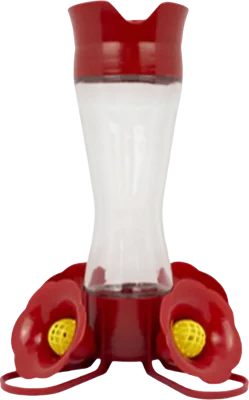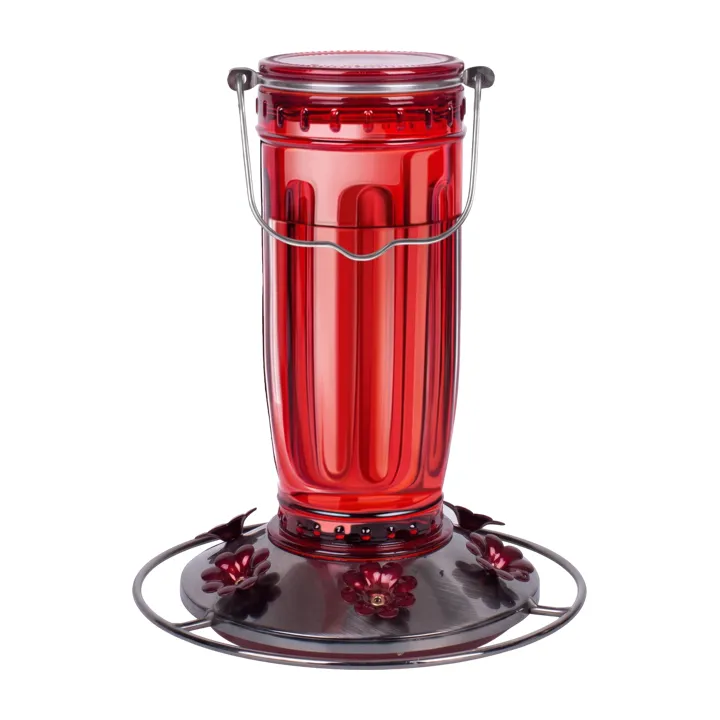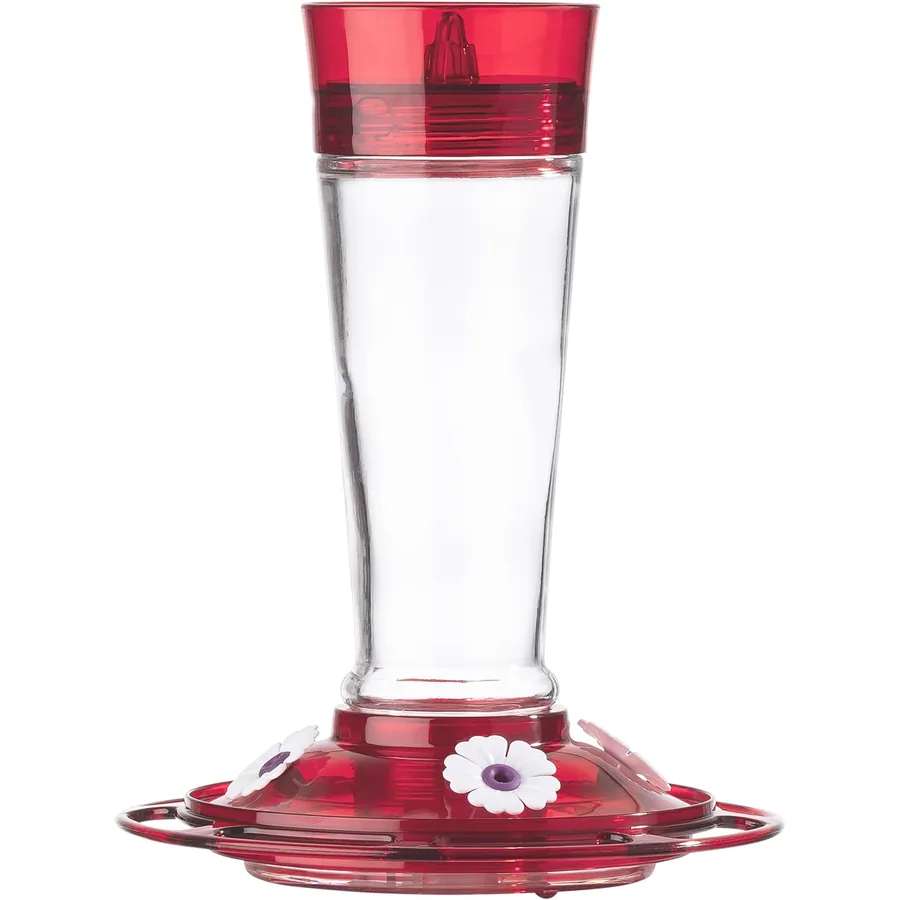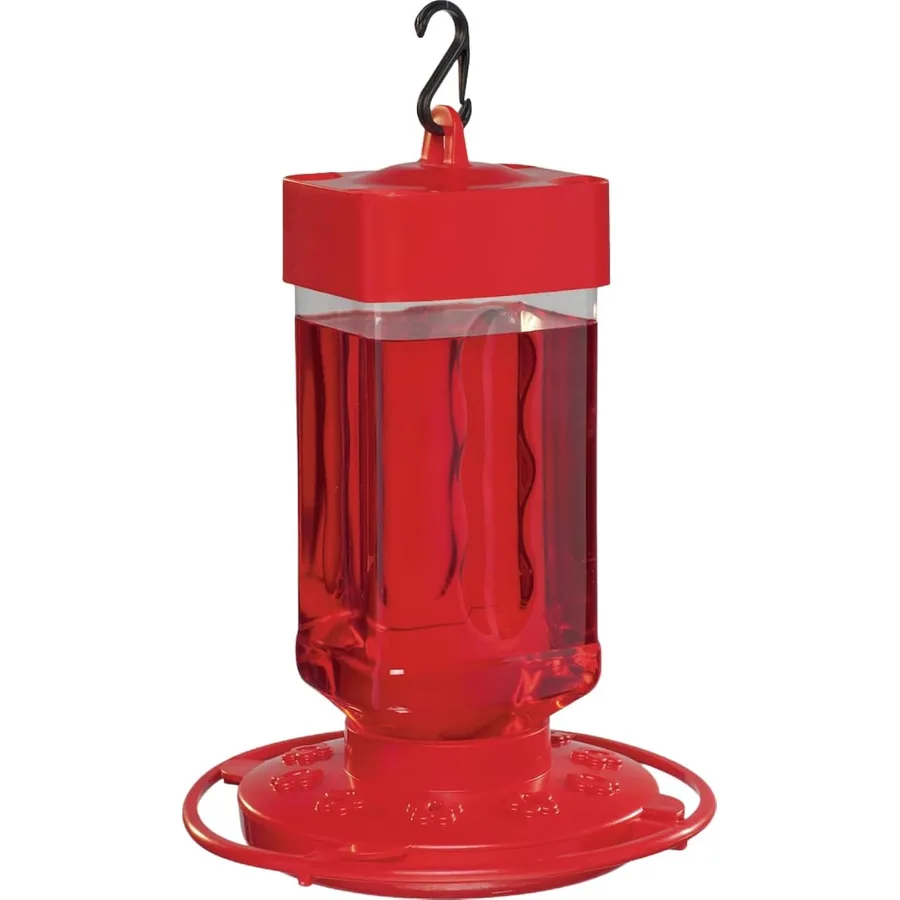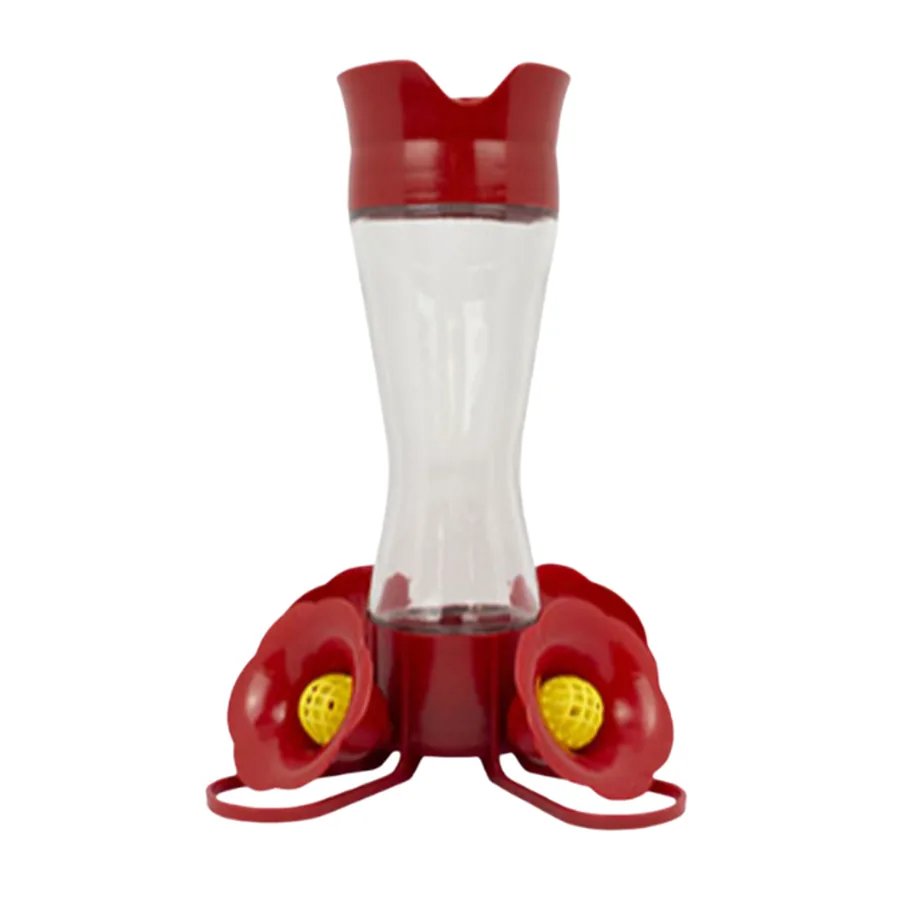
Ask anyone who's fed hummingbirds for a few years and you'll hear the same story. They started with a bottle feeder. Most of them don't use one anymore.
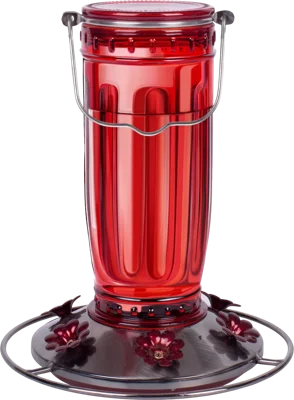
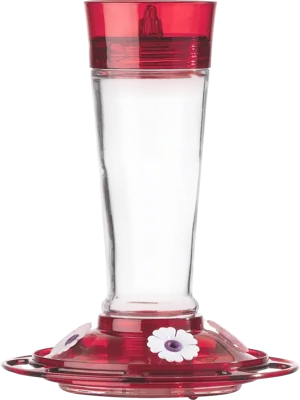
Here's the first problem, and it's the one that stings. You spend real money on a pretty glass bottle feeder. You hang it where you can see it from the kitchen window. Then you wait.
One or two birds show up. Sometimes none.
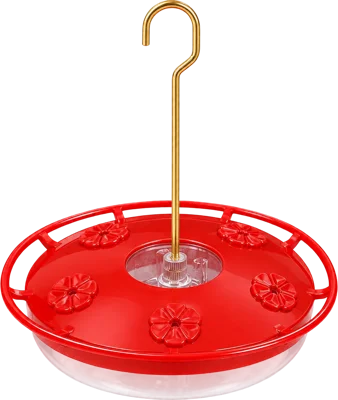
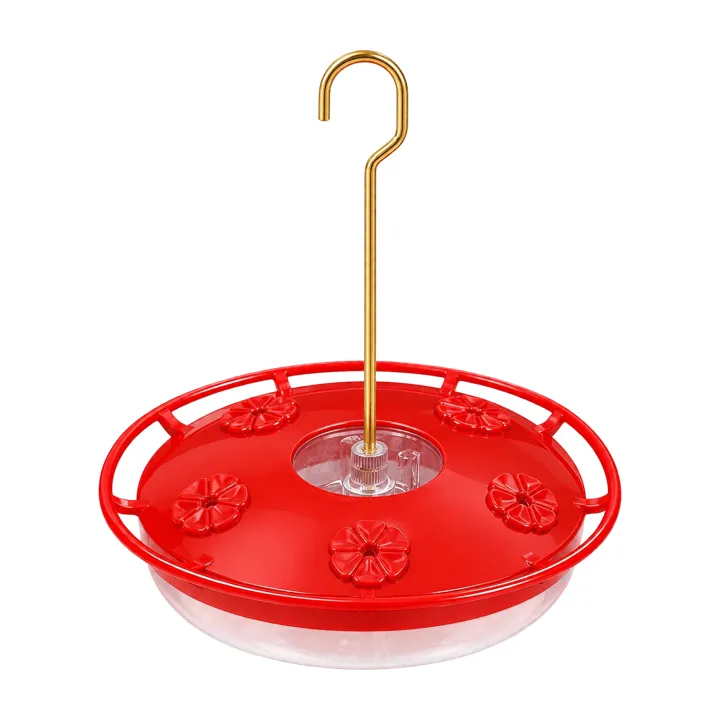
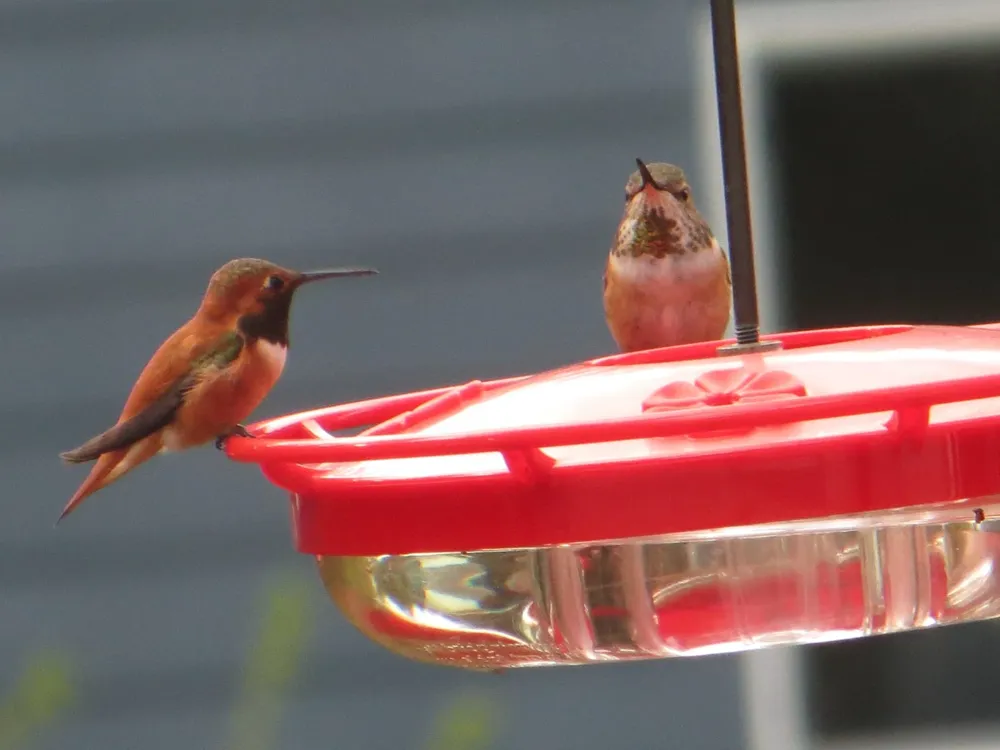
Then a plain red dish feeder goes up next to it, and the birds switch over within a day.
People who've fed them for years say the same thing: the fancy bottles sit there while the birds line up at the flat red one.
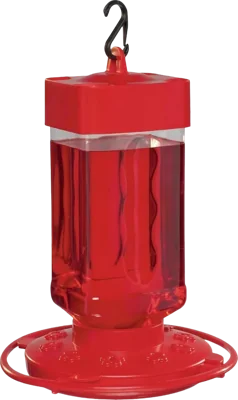
The second problem is cleaning. A bottle feeder is a tall tube with a narrow neck, and mold grows where the brush can't reach.
A rinse doesn't get it. So the feeder gets scrubbed less and less, and the black film keeps coming back.
Then there's the drip. A bottle hangs upside down, so the nectar is always pressing on the ports. A warm afternoon or a gust of wind pushes it out, and it runs down the side.
That sticky trail brings company. Bees and yellow jackets find it first, then the ants. Some people end up with hundreds of yellow jackets on a single bottle feeder.
So people do the natural thing. They take it down and throw it out. Not because they lost interest in the birds. Because the feeder turned into a chore that never worked.
That's exactly why we wrote this guide.
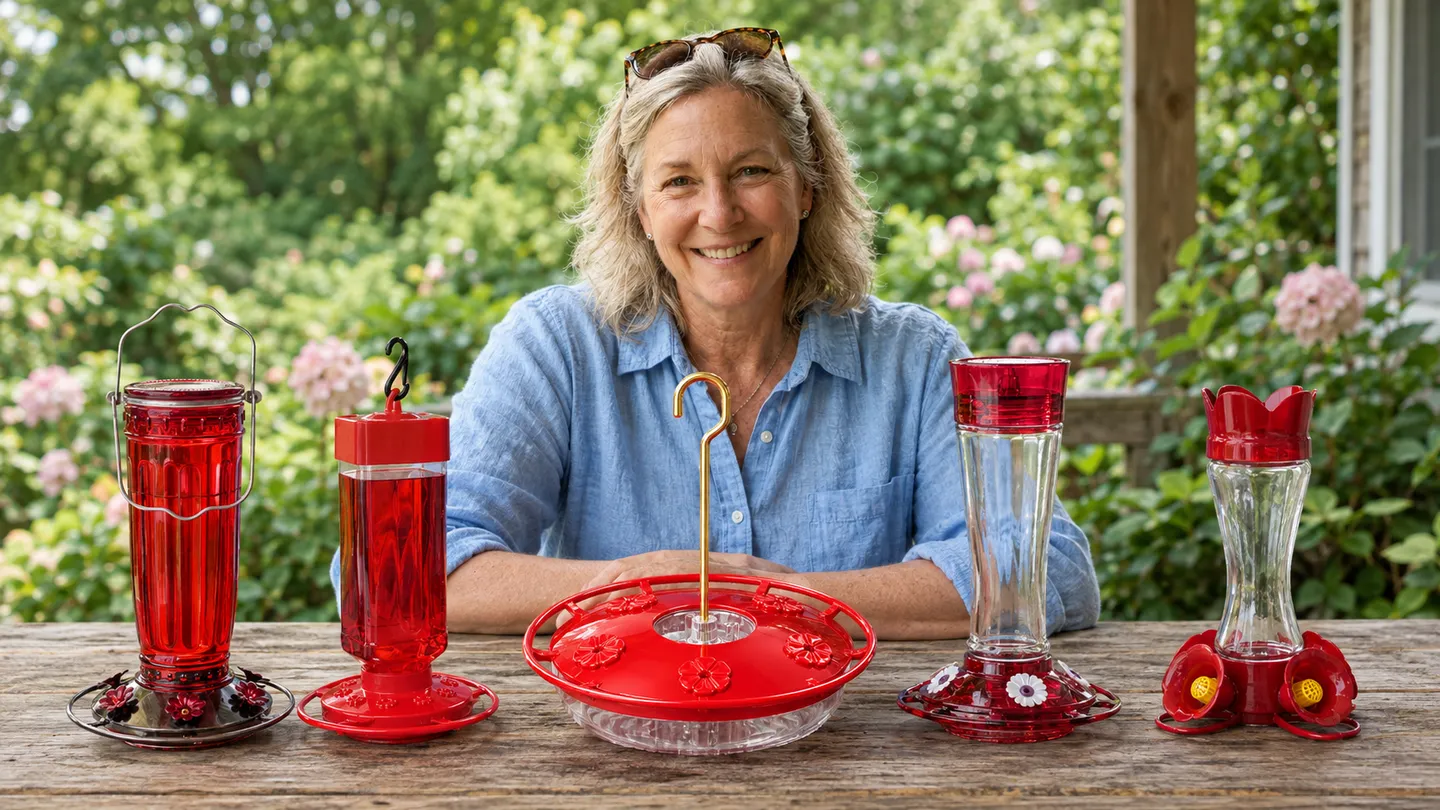
We put five of the most popular feeders through the same seven checks. Most failed several. Only one passed all seven.
Below you'll find what actually separates a feeder you keep from one you quietly retire, what to look for before you spend anything, and the five we ranked.
First, what's really at stake when a feeder goes bad.